What Nigeria Owes Its Mothers
By Chike Donald Ibewuike | SimpleFix Nigeria
Published: 10 May 2026
This Sunday, several million Nigerians will say "Happy Mother's Day" for the 4th time this year, and most of them will mean it. Churches will hold special services. WhatsApp statuses and Instagram stories will fill with tributes. Families will take photographs and write long captions about sacrifice, strength, and love.
Then Monday will come.
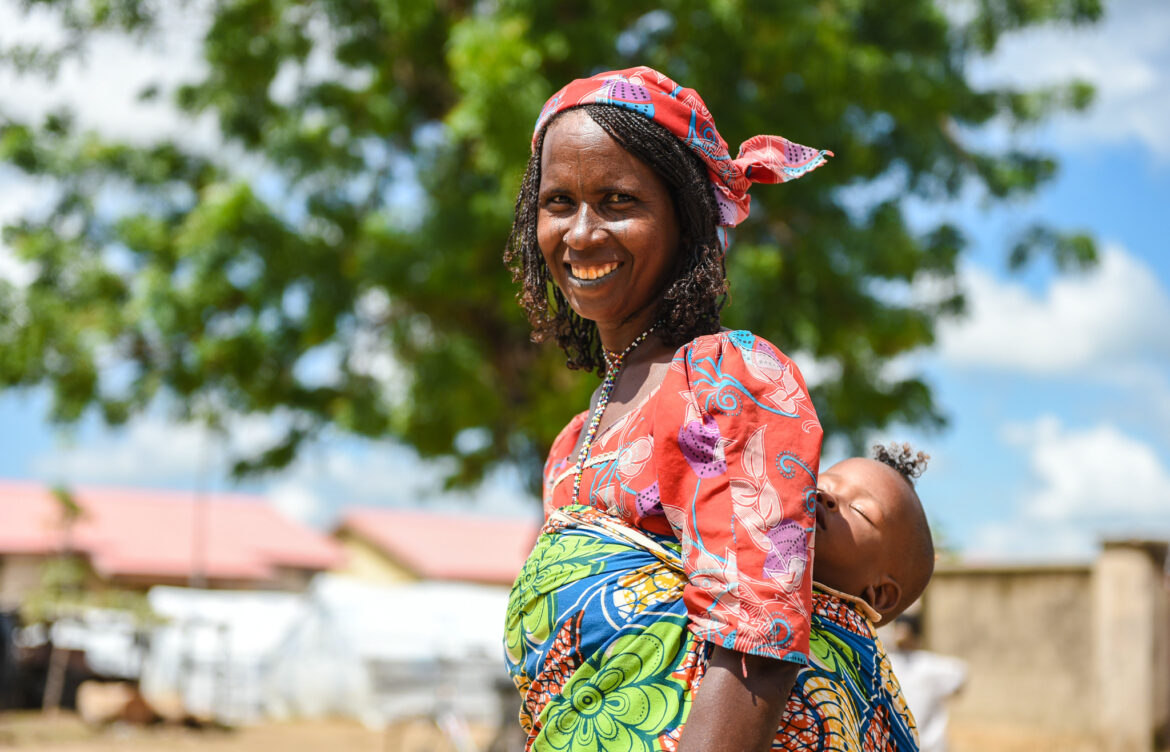
And Nigerian mothers will continue their transcendental but thankless work that our country still refuses to count.
This is not a sentimental observation. As of February this year, the National Bureau of Statistics, working with UN Women, released Nigeria's first stand-alone Time Use Survey, and the findings are what any random Nigerian woman would have told you anecdotally, even without the research to back it up. Women aged 15 and above spend nearly 5 hours a day on unpaid domestic and care work, while their male counterparts spend only a fifth of this time. This ratio holds in cities, villages, and even across income brackets. And it does not budge when women take paid jobs, as working women still spend over 20% of their day on unpaid care, while working men just under 4%. The "double shift" is not a social complaint. It is measurable labour.
That labour, in the most literal sense, is what keeps the country running.
The Economy We Refuse to Count
Cooking. Cleaning. Childcare. Caring for elderly relatives. Fetching water in the absence of public water. These tasks sustain the workforce that appears in Nigeria's GDP figures. Though these labours remain economically invisible, the Nigerian economy depends heavily on them.
Globally, UN Women estimates that women's unpaid labour is worth around eleven trillion US dollars a year, close to 9% of world GDP. In Nigeria, a late 2025 report by NarratEQ estimates women's annual contribution at up to $111 billion.
A counterargument can be made around whether every form of household labour should be absorbed into the formal economy, or on how to even begin such a statistical endeavour. However, entirely ignoring its economic value has produced distortions of its own; invisibility in the budget, in labour law, and in the design of public services. And invisibility, as is often the case in Nigerian policy, is never without its visible consequences.
A Federalism of Maternity Leave
Consider maternity protection. Nigerian law treats motherhood differently depending on where, exactly, a woman happens to work — and, indeed, on whether her work is recognised by formal labour law at all. Under Section 54 of the Labour Act, a private-sector employee is entitled to twelve weeks of leave at fifty per cent of her wage. A federal civil servant gets sixteen weeks, fully paid. Lagos, Cross River, and Kwara State public servants now receive six months. The International Labour Organization's recommended floor under Convention 183 is fourteen weeks. Nigeria's federal floor sits below it. Worse still, women working in the informal economy, traders, farmhands, market women, small-business owners, etc., who account for between 77 to 95% of Nigerian women, are without the purview and protections of the Labour Act.
Moreover, even where protections exist, enforcement is weak. The Labour Act's nursing-break provisions (two breaks of thirty minutes daily) exist in most workplaces in name only. Domestic workers, despite performing paid versions of the same care labour millions of women perform for free, sit largely outside formal labour protection altogether. The policy direction Nigeria needs is not difficult to articulate. The challenge, as always, is political will and administrative seriousness.
Recognise. Reduce. Redistribute.
Thankfully, the international literature has converged on a workable framework, often summarised as the Three Rs, and none of what is prescribed requires Nigeria to attempt to reinvent the wheel. These instruments already exist; some are already being partially funded, while others are before the National Assembly. What remains largely is the political will to legislate and the administrative seriousness to execute.
Recognise.
The intellectual case for counting unpaid work is not new. From as far back as 1988, Marilyn Waring in her prominent work, If Women Counted, made the case for household labour being recognized as part of GDP through what she termed "satellite accounts"; supplementary national accounts that run beside GDP, capturing the work that main figures exclude, and putting monetary value on it using time-use data and market wage equivalents. The data foundation a satellite account rests on — detailed time-use measurement — is exactly what the NBS Time Use Survey now provides.
Thus, the Nigerian sequence is short. The NBS Time Use Survey needs to become a recurring instrument published once every three to five years, like the Demographic and Health Survey or the Living Standards Survey. The Federal Ministry of Budget and Economic Planning, in coordination with the National Bureau of Statistics, can build a Care Economy Satellite Account that publishes alongside the quarterly GDP figures. SDG Target 5.4.1 already obligates Nigeria to do this by 2030. The methodology is mature. The instrument is built. All that is required is a recurring budget line for funding and an administrative mandate.
Reduce.
Every infrastructure failure in Nigeria is, in part, also a women's–time policy. The Demographic and Health Survey has consistently found that nearly half of Nigerian households spend thirty minutes or more a day fetching water for domestic use; this figure rises sharply in rural communities. This time, almost without exception, comes women's days. Every public borehole installed within 500m of a household returns roughly 30 to 90 minutes a day to a woman, every day, indefinitely. In sum, the infrastructural failures that lengthen women's days are not gender-neutral.
Several existing federal instruments already point in the right direction; they simply need to work. Take the following two examples.
The first is the Basic Health Care Provision Fund (BHCPF). Established by the 2014 National Health Act and statutorily funded at 1% of the Consolidated Revenue Fund, the BHCPF is supposed to capitalise primary healthcare across all 774 local government areas. When BHCPF disbursements arrive late or short as they routinely do, the cost falls first on women, who travel further, wait longer, and absorb the gap when a primary health centre is unstaffed or out of stock. Releasing the BHCPF in full and on time is a "Reduce" intervention masquerading as health policy.
Another is the National LPG Expansion Implementation Plan, launched in 2021 to shift Nigerian households from biomass cooking (wood, charcoal, kerosene) to liquefied petroleum gas. Biomass cooking is one of the most time-intensive forms of domestic labour, and its burdens fall almost entirely on women and girls. Accelerating LPG penetration, particularly across the North, returns hours per day to millions of women. The same logic applies to almost any reliable improvement in grid electricity, and to any extension of the rural water schemes administered by the Federal Ministry of Water Resources and Sanitation.
Some states have begun running ahead of the federal pace. Lagos State, for instance, has piloted subsidised model creches and care arrangements through its Ministry of Women Affairs and Poverty Alleviation. Other states like Cross River, Kwara and Enugu have moved on adjacent fronts having extended maternity leave, codified paternity leave, and expanded state-level family welfare provisions. These are not usually large or fully scaled programmes, and their impacts remain uneven, due to them often being under-funded and largely invisible in public discourse. However, they work. Scaling such initiatives nationally, through a federal cost-share with state-level care infrastructure, would do more for women's labour-force participation than almost any tax incentive currently on the table.
In essence, the point of "Reduce" is not to make care work disappear, but rather, to subtract from it the parts that exist only because public infrastructure has failed.
Redistribute.
Simply put, we cannot continue treating care work as exclusively female labour.
Firstly, Nigeria needs a clearer national maternity protection floor for both the public and private work sectors that meets, at a minimum, the ILO's fourteen-week standard. This can be one bill in the National Assembly, not a constitutional reform. Hence, with the right advocacy, it is not far-fetched.
Furthermore, paternity leave needs to actually become a thing in Nigeria. Federal civil servants have had a fourteen-day entitlement since 2022. Lagos and Enugu have legislated their own. Codifying a national private-sector minimum, even at two weeks, would begin to redistribute care responsibilities at the household level, where the five-to-one ratio actually plays out.
Most pertinently, the most exposed category of women workers in the country needs to be brought into formal labour protection. Domestic and care workers sit largely outside the Labour Act and outside any social insurance scheme. They perform paid versions of the same labour millions of Nigerian women perform for free, yet they have no statutory minimum wage, no pension contributions, and limited recourse for wrongful dismissal. The instrument to fix this exists. ILO Convention 189 (Decent Work for Domestic Workers) was adopted in 2011 and has been ratified by more than thirty countries, including South Africa, Mauritius, and Argentina. Nigeria has not. Doing so, and translating it into amendments to the Labour Act, would bring several million Nigerian women into formal labour protection for the first time while also effectivizing the 1974 Act, which is desperately in need of a modern facelift.
Altogether, the prescriptions of the three Rs are not merely welfare measures. All suggestions mentioned above directly or indirectly impact time-use for Nigerian women, which in turn impacts GDP. And, with one or two exceptions, every one of them is an instrument Nigeria has already half-built. The work that remains is administrative, legislative, and political. None of it requires us to invent something new.
The Opportunity Sitting Beneath the Statistics
Done seriously, none of this is a cost line. It is a labour-market expansion. At the Time Use Survey's dissemination in Abuja in October 2025, the NBS's Caroline Faturoti, Head of Gender and Social Inclusion, projected that investing in and formalising Nigeria's care economy — childcare in particular — could generate up to 17 million new jobs over time, most of them benefiting women directly. The figure is conditional on implementation, but the order of magnitude is striking. A country with our youth bulge and our employment crisis cannot afford to leave that opportunity on the table because we have decided, by habit, not to count what mothers do.
There is also a quieter argument that Mother's Day cards rarely make. Nigeria continues to record one of the world's highest maternal mortality rates, a public health emergency driven primarily by clinical and logistical failures: weak emergency obstetric care, transport delays, and skilled-attendant shortages. Unpaid care burdens are not the proximate cause of those deaths. But they reflect the same institutional neglect, and they compound the vulnerability, in fatigue, in delayed care-seeking, in the underinvestment in primary healthcare. The bouquets do not change the ledger. Only the budget does.
Beyond the Bouquets
Nothing here is an argument against the celebrations. Mothers should be celebrated in Nigerian homes and in Nigerian public life. But mothers will give whether we celebrate them or not. That is the nature of mothering; it does not wait for permission, recognition, or reciprocity.
A society that genuinely values motherhood does not take advantage of this nature, but strives to reduce its burdens. It protects women's health. It counts their labour honestly. And it builds systems that allow care work to exist without consuming entire lives.
The flowery praises we give our mothers will wilt by Monday. Their work will remain.
If we wish to truly honour them, we should start by making their work count.
- No Comments
- May 10, 2026